19 Small Kitchen Ideas That Maximize Space
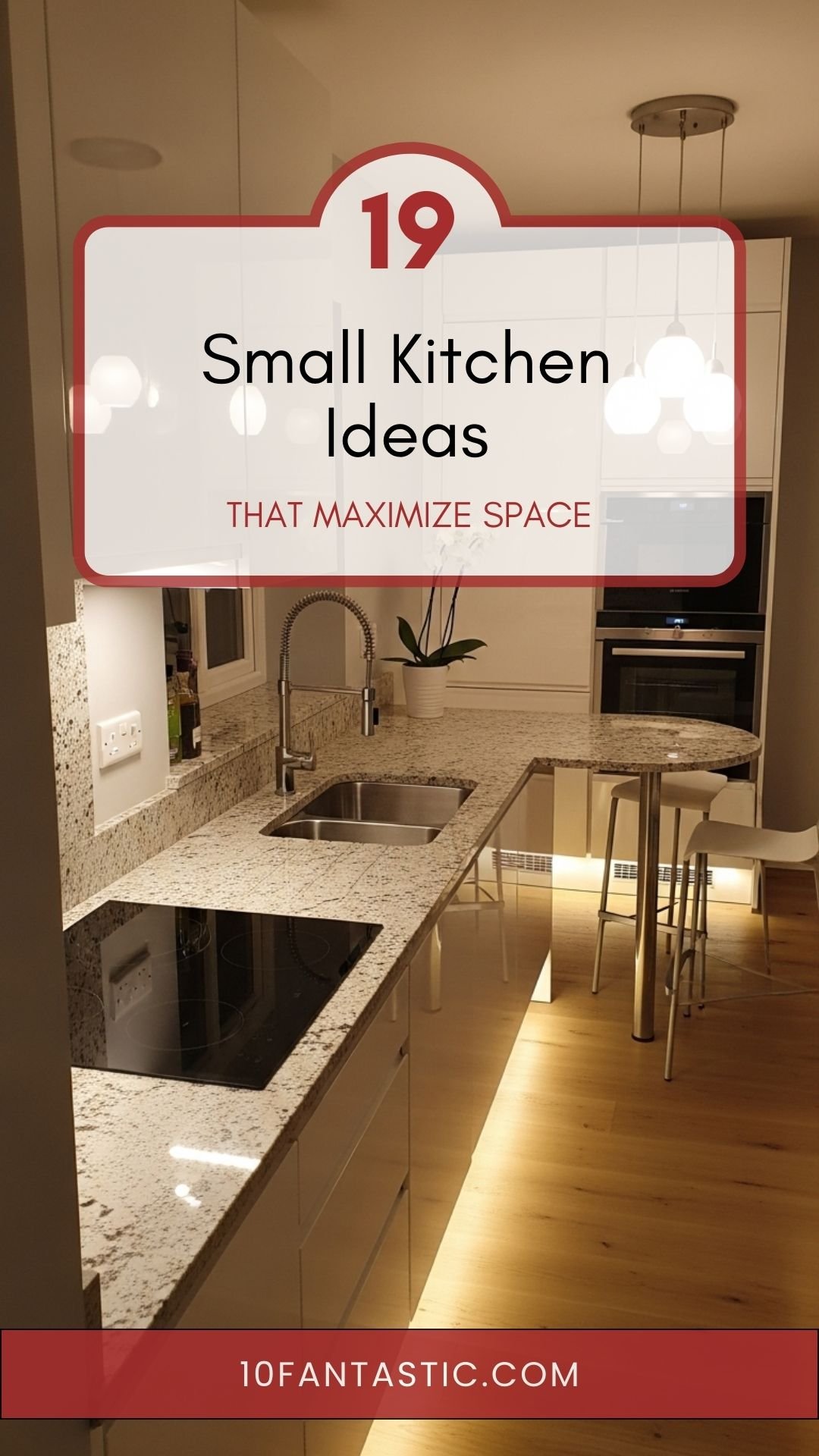
Small kitchen ideas are essential for homeowners who want to make the most of limited space without sacrificing style or functionality. A small kitchen can easily feel cramped or cluttered if not designed thoughtfully, but with the right approach, it can become one of the most efficient and visually appealing areas of the home. Strategic layouts, smart storage solutions, and intentional design choices all play a role in maximizing every inch. Rather than focusing on what a small kitchen lacks, effective design highlights its potential.
The beauty of well-executed small kitchen ideas lies in their practicality. From clever cabinetry solutions to visual tricks that enhance openness, these ideas help kitchens feel larger, brighter, and more organized. Whether you live in an apartment, a compact home, or simply want to optimize a secondary kitchen, these ideas provide proven solutions. Below are 19 carefully detailed small kitchen ideas, each explained with depth to help you create a space that feels efficient, stylish, and comfortable.
1. Vertical Storage Cabinets

Vertical storage cabinets are one of the most effective small kitchen ideas for maximizing limited square footage. When floor space is scarce, extending cabinetry upward allows you to utilize wall height efficiently. Tall cabinets provide additional storage for items that are not used daily, such as seasonal cookware or bulk pantry supplies. This approach keeps countertops clear, which instantly makes a small kitchen feel more open and functional.
To prevent vertical cabinets from feeling overwhelming, color choice and finish are important. Light-colored cabinetry or finishes with subtle sheen reflect light and maintain a sense of openness. Interior organizers, pull-out shelves, and labeled sections improve accessibility, ensuring that height does not compromise usability. Vertical storage works especially well in galley kitchens or narrow layouts where horizontal expansion is impossible. This idea turns unused wall space into valuable storage while preserving a clean and streamlined appearance.
2. Open Shelving Instead of Upper Cabinets
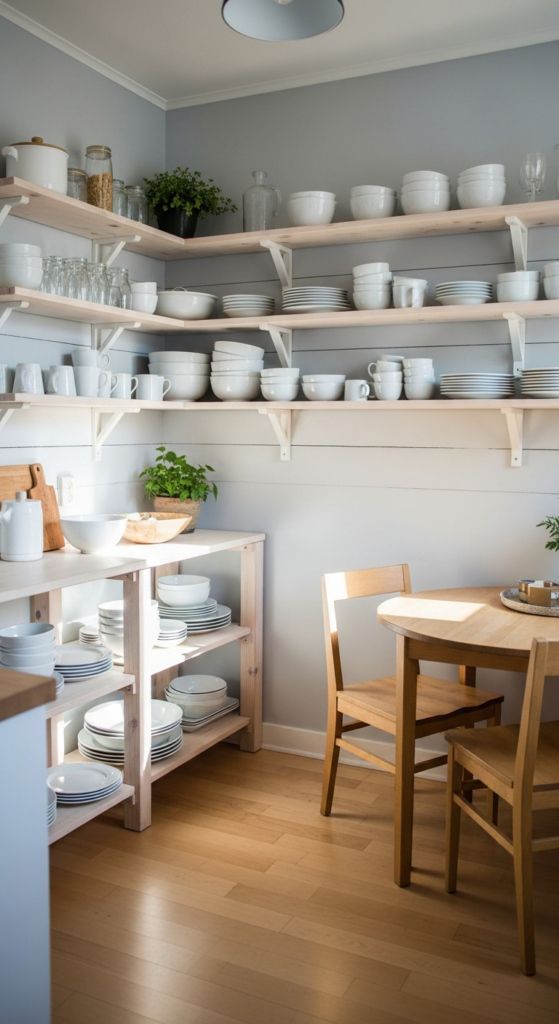
Open shelving is a popular solution among small kitchen ideas because it reduces visual bulk. Traditional upper cabinets can make a compact kitchen feel boxed in, whereas open shelves create a lighter and more breathable look. This design choice allows the eye to travel freely, making the kitchen appear larger and more inviting.
Functionality remains important with open shelving. Storing frequently used dishes, glassware, or neatly arranged containers keeps everything within reach while maintaining order. Limiting shelf contents to essentials prevents clutter and preserves visual balance. Materials such as wood or metal can add warmth or modern contrast depending on the overall style. Open shelving works particularly well in kitchens that receive good natural light, enhancing openness and accessibility.
3. Light Color Palette for Visual Expansion
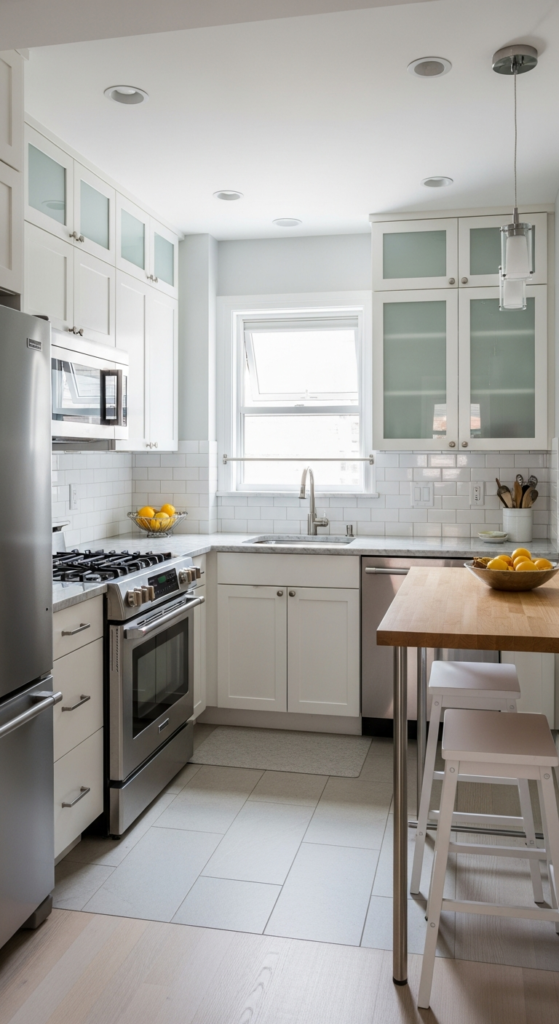
Using a light color palette is one of the simplest yet most effective small kitchen ideas. Light shades such as white, cream, soft gray, or pale beige reflect natural and artificial light, helping the space feel larger and more open. Dark colors tend to absorb light, which can make a small kitchen feel closed in.
A cohesive palette across walls, cabinets, and backsplashes enhances continuity. Subtle contrasts through texture or finishes prevent the space from appearing flat. Glossy surfaces further enhance light reflection, adding to the sense of openness. This idea is especially useful in kitchens with limited windows, where maximizing brightness is essential for both function and comfort.
4. Compact Appliances
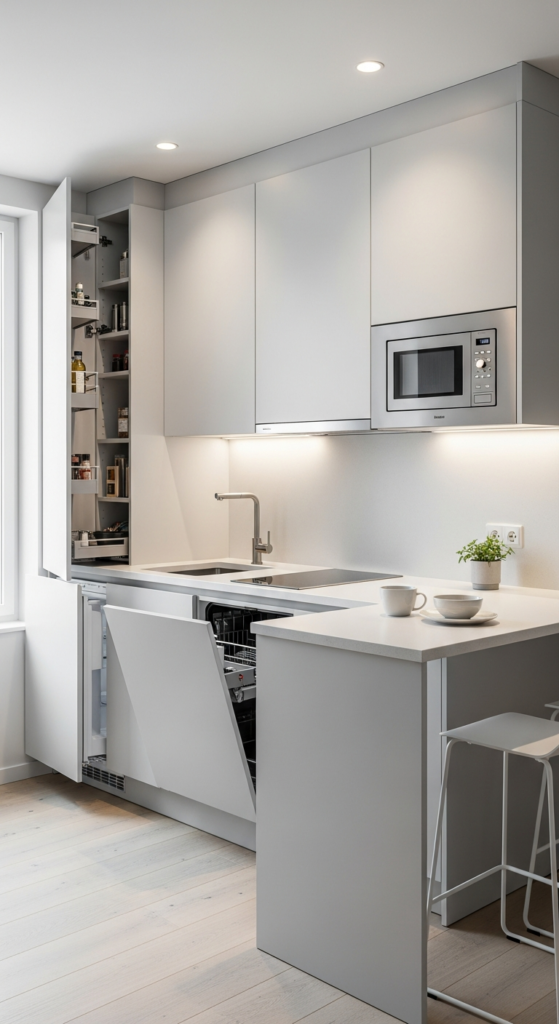
Compact appliances are essential components of smart small kitchen ideas. Standard-sized appliances can dominate limited space, leaving little room for movement or storage. Choosing slim refrigerators, narrow dishwashers, or combination appliances allows kitchens to function fully without overwhelming the layout
Modern compact appliances offer performance comparable to their full-sized counterparts. Integrated designs blend seamlessly with cabinetry, maintaining a clean look. Placing appliances strategically improves workflow and accessibility. This approach is ideal for apartment kitchens or minimalist designs where efficiency and aesthetics must work together.
5. Multi-Functional Kitchen Island
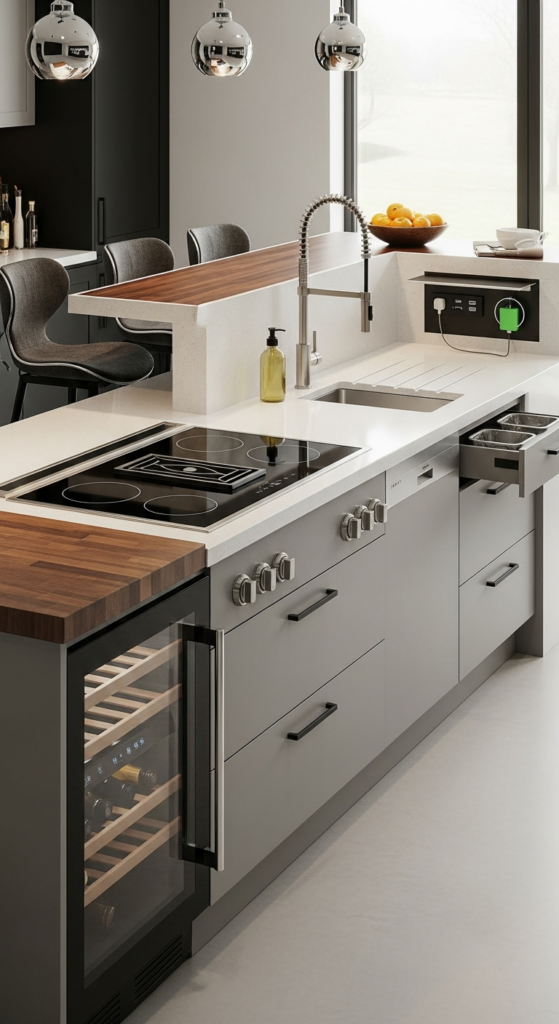
A multi-functional kitchen island is one of the most versatile small kitchen ideas when space allows. Rather than a large standalone island, a compact version can serve multiple purposes such as prep space, storage, and dining. Islands with built-in shelves or drawers provide additional storage without expanding the kitchen footprint.
To keep the kitchen balanced, the island should be proportionate to the room size. Light colors or open bases prevent visual heaviness. Rolling islands add flexibility, allowing movement when more floor space is needed. This idea enhances functionality while maintaining openness, making small kitchens more adaptable to daily needs.
6. Smart Corner Storage Solutions
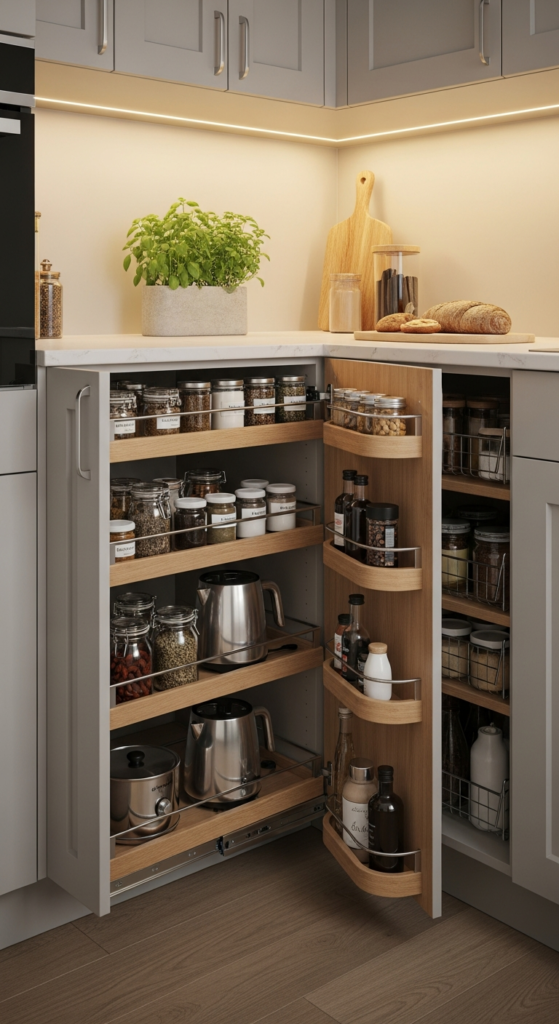
Corners often become wasted space in small kitchens, making smart corner storage one of the most practical small kitchen ideas. Solutions such as lazy Susans, pull-out corner drawers, or swing-out shelving systems transform awkward areas into accessible storage zones. These designs maximize every inch without altering the kitchen layout.
Proper corner storage reduces clutter and improves workflow. Items stored in corners remain visible and reachable, minimizing frustration. Choosing smooth-glide mechanisms ensures ease of use, especially in tight spaces. This idea is particularly valuable in L-shaped or U-shaped kitchens where corners dominate the layout.
7. Pull-Out Pantry Cabinets
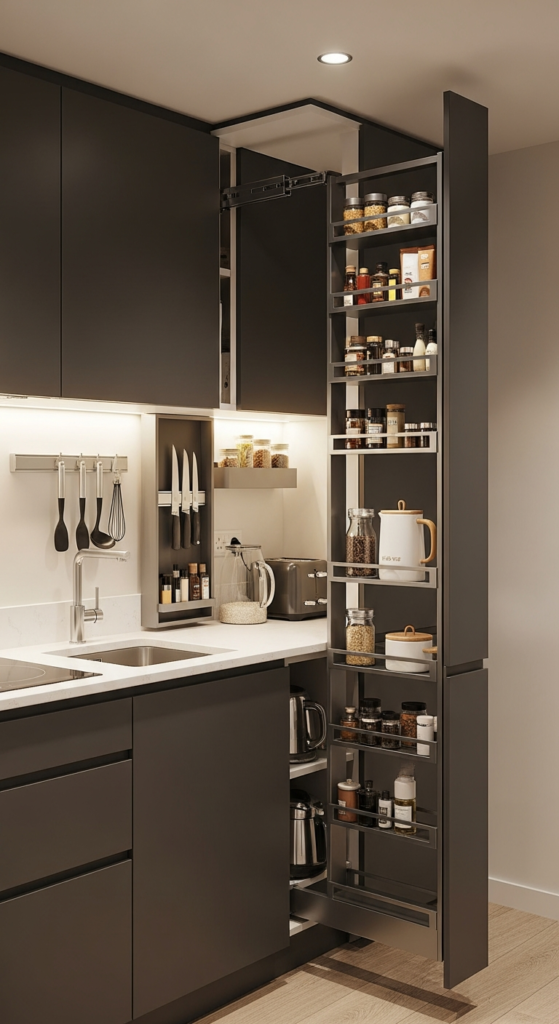
Pull-out pantry cabinets are one of the most efficient small kitchen ideas for maximizing narrow spaces. Instead of traditional deep cabinets that hide items at the back, pull-out pantries provide full visibility and easy access. These tall, slim units are perfect for storing dry goods, spices, and small appliances without taking up valuable floor space. By utilizing vertical height, they transform overlooked gaps into highly functional storage areas.
The true advantage of pull-out pantry cabinets lies in organization. Adjustable shelves allow customization based on storage needs, keeping everything neatly arranged. Smooth sliding mechanisms ensure effortless use, even in tight kitchens. Choosing finishes that match surrounding cabinetry helps the pantry blend seamlessly into the design. This idea is especially useful in galley kitchens or apartments where every inch matters, offering maximum storage without visual clutter.
8. Wall-Mounted Storage Systems

Wall-mounted storage systems are practical small kitchen ideas that free up countertops and cabinet space. By installing rails, hooks, or magnetic strips on walls, you can store utensils, cookware, or spices within easy reach. This approach keeps frequently used items accessible while maintaining an organized workflow. Utilizing walls effectively reduces the need for bulky storage units.
To keep the kitchen visually balanced, wall-mounted storage should be arranged thoughtfully. Grouping items neatly and limiting the number of exposed tools prevents clutter. Materials such as stainless steel or wood can complement different kitchen styles. This idea works especially well in compact kitchens where traditional storage solutions are limited. By turning walls into functional zones, the kitchen becomes more efficient and open.
9. Reflective Backsplash Materials
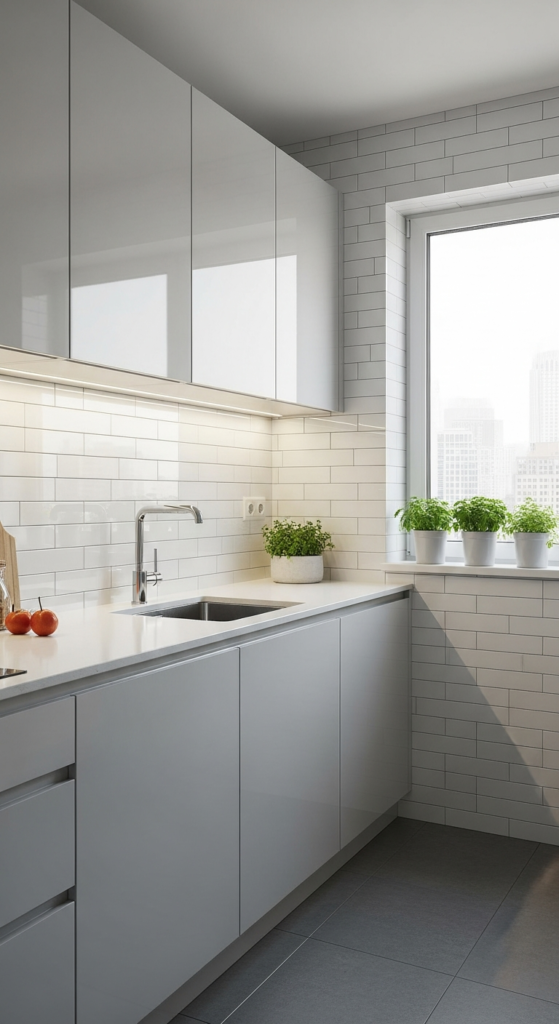
Reflective backsplash materials are clever small kitchen ideas that enhance brightness and perceived space. Glass, glossy tiles, or mirrored finishes reflect light throughout the kitchen, making it feel larger and more open. This is particularly beneficial in kitchens with limited natural light, where brightness plays a key role in comfort and usability.
Choosing simple patterns or solid colors ensures the backsplash does not overwhelm the space. Light-reflective surfaces paired with under-cabinet lighting amplify the effect. Easy-to-clean materials also improve functionality, combining style with practicality. This idea visually expands the kitchen while maintaining a polished and modern appearance.
10. Slimline Furniture and Fixtures
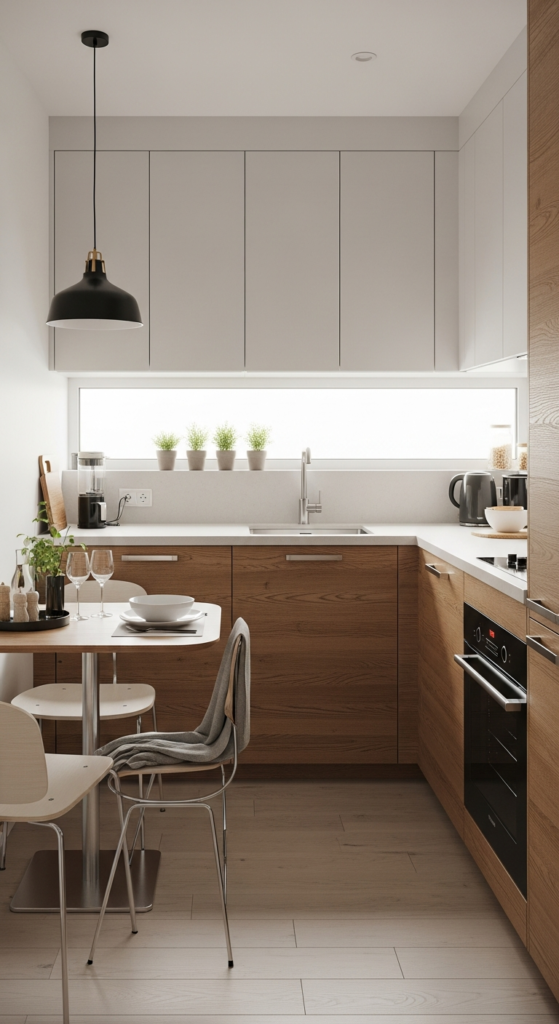
Slimline furniture and fixtures are essential small kitchen ideas for maintaining flow and accessibility. Bulky furniture can restrict movement and make a kitchen feel cramped. Choosing narrow dining tables, compact stools, or slim sinks helps preserve open pathways and improves usability.
Modern slimline designs are both stylish and functional. Wall-mounted or foldable furniture adds flexibility, allowing the kitchen to adapt to different needs. Keeping finishes light and consistent prevents visual fragmentation. This idea is ideal for kitchens that double as dining spaces, ensuring comfort without sacrificing space.
11. Under-Cabinet Lighting
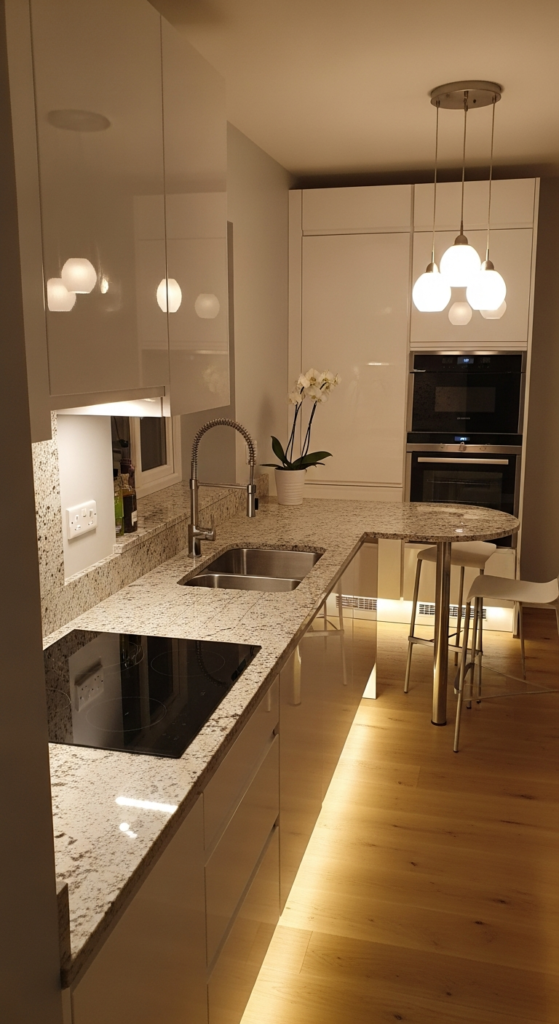
Under-cabinet lighting is one of the most effective small kitchen ideas for enhancing functionality and ambiance. By illuminating work surfaces directly, this lighting solution improves visibility and safety. It also eliminates shadows created by overhead lighting, making the kitchen more pleasant to use.
In addition to practicality, under-cabinet lighting adds visual depth. Soft LED strips create a warm glow that enhances finishes and materials. Choosing energy-efficient lighting ensures sustainability and long-term savings. This idea works in any kitchen size but is especially impactful in small kitchens where layered lighting makes the space feel larger and more inviting.
12. Integrated Storage Appliances

Integrated storage appliances are innovative small kitchen ideas that combine functionality with sleek design. Appliances such as refrigerators or dishwashers with built-in storage compartments maximize efficiency without adding clutter. These designs blend seamlessly into cabinetry, creating a cohesive and streamlined look.
This approach reduces visual interruptions, making the kitchen feel more spacious. Integrated appliances also improve workflow by keeping related items nearby. Selecting models that match cabinetry ensures harmony. This idea is perfect for modern kitchens where efficiency and aesthetics are equally important.
13. Glass Cabinet Doors
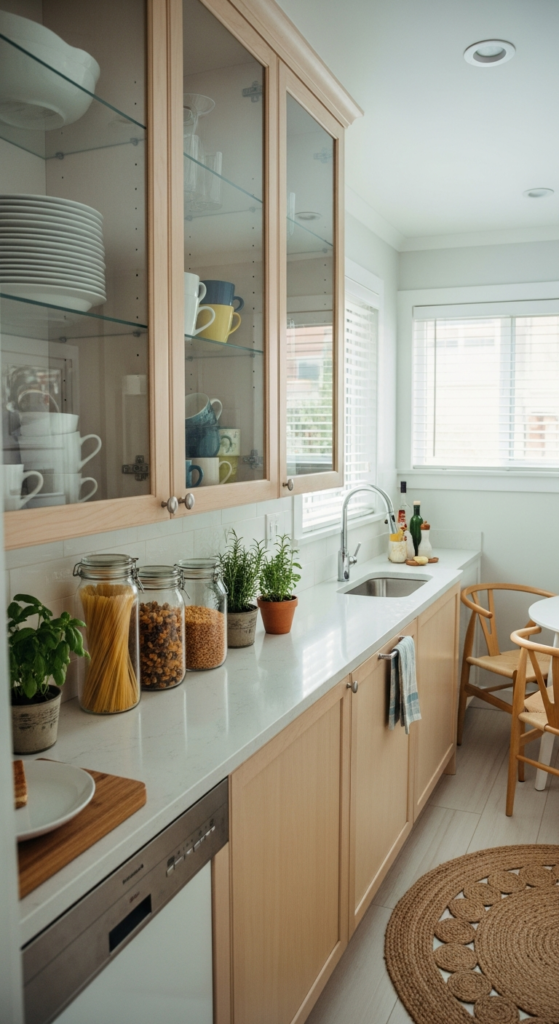
Glass cabinet doors are smart small kitchen ideas that reduce visual heaviness. Transparent or frosted glass allows light to pass through, preventing cabinets from feeling bulky. This design trick helps the kitchen appear larger and more open while still providing enclosed storage.
To maintain a clean look, cabinet contents should be neatly organized. Frosted glass offers privacy while maintaining brightness. Pairing glass doors with interior lighting enhances the effect further. This idea works well in small kitchens where maintaining openness is essential for comfort and style.
14. Fold-Down Tables and Counters
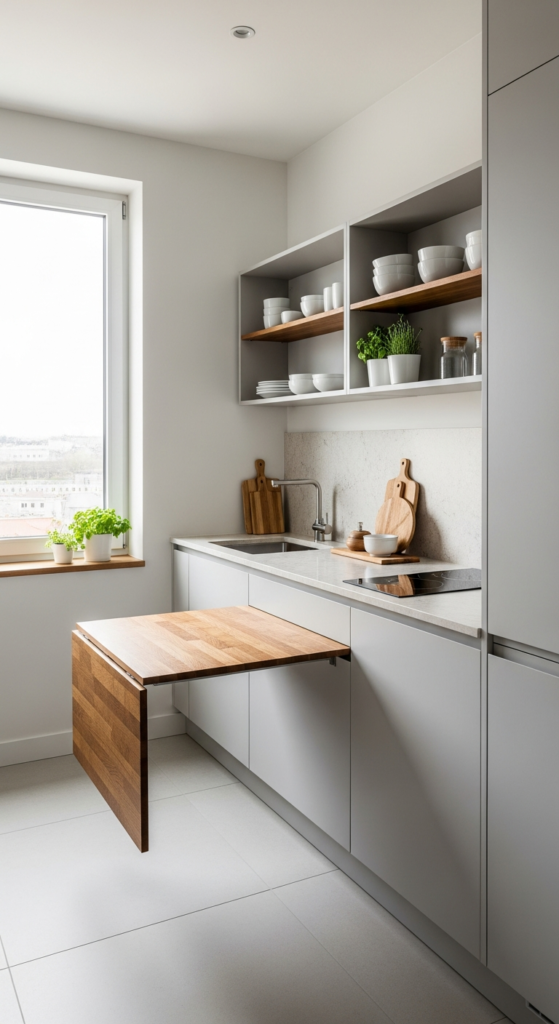
Fold-down tables and counters are among the most practical small kitchen ideas for homes where space is extremely limited and flexibility is essential. These space-saving surfaces are mounted directly onto walls or cabinetry and can be folded down when needed and tucked away when not in use. This design instantly frees up valuable floor space, allowing the kitchen to remain open and easy to move through during daily activities. Fold-down tables are especially effective in studio apartments, galley kitchens, and compact urban homes where every square foot must serve multiple functions. They can be used as food preparation areas, breakfast tables, baking stations, or even temporary workspaces for remote work. Because they disappear when folded, they prevent the kitchen from feeling crowded or cluttered, which is a common issue in small layouts.
The success of fold-down tables and counters depends heavily on thoughtful placement and material choice. Installing them near cooking or sink zones improves workflow and reduces unnecessary movement. Durable materials such as solid wood, laminate, or engineered stone ensure stability and longevity, even with daily use. When folded up, these tables should sit flush against the wall, blending seamlessly into the kitchen design and maintaining a clean visual appearance. This makes fold-down surfaces a smart solution for homeowners who want full kitchen functionality without committing to permanent furniture that takes up space.
See More: 15 Brown Aesthetic Ideas
15. Ceiling-Height Cabinetry
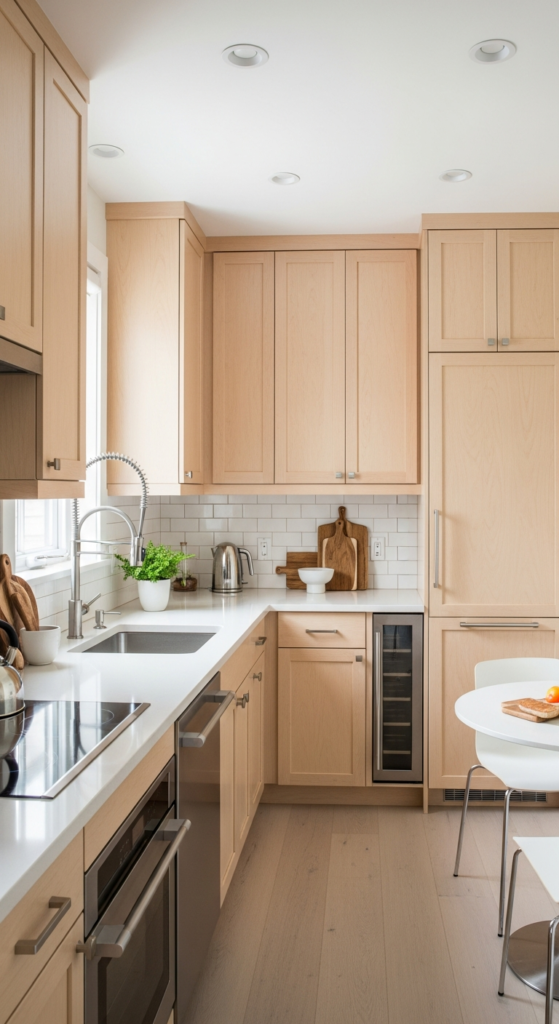
Ceiling-height cabinetry is one of the most impactful small kitchen ideas for maximizing storage while keeping the layout efficient and visually cohesive. By extending cabinets all the way to the ceiling, homeowners eliminate wasted vertical space that often collects dust and contributes nothing to functionality. These upper sections provide ideal storage for rarely used items such as seasonal cookware, specialty appliances, or bulk pantry supplies. In addition to increasing storage capacity, ceiling-height cabinets create strong vertical lines that visually draw the eye upward, making the kitchen appear taller and more spacious. This is especially beneficial in compact kitchens where floor space is limited but ceiling height offers untapped potential.
To prevent ceiling-height cabinetry from feeling heavy or overwhelming, design details matter greatly. Light-colored finishes, flat-panel doors, or minimal hardware help maintain a clean and balanced appearance. Incorporating interior pull-down shelves or step-access solutions improves accessibility, ensuring that upper cabinets remain practical rather than purely decorative. This idea works exceptionally well in kitchens with standard or high ceilings, where unused space often goes unnoticed. By fully utilizing vertical height, ceiling-height cabinetry enhances organization, improves aesthetics, and helps small kitchens feel intentional rather than constrained.
16. Built-In Seating with Storage
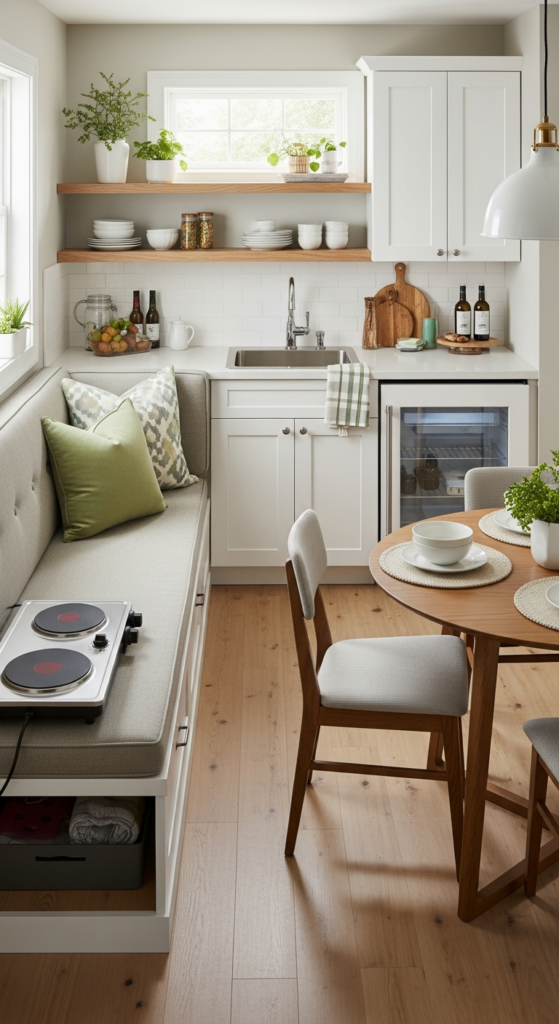
Built-in seating with storage is a clever and highly efficient small kitchen idea that combines comfort, organization, and space optimization. Instead of using traditional dining chairs and tables that take up valuable floor space, built-in benches can be installed along walls, corners, or windows. These benches often include hidden storage compartments underneath, providing ample space for storing cookware, linens, small appliances, or pantry items. This dual-purpose design reduces clutter while creating a cozy and functional dining area within the kitchen itself. Built-in seating is particularly useful in eat-in kitchens where space must serve both cooking and dining needs without feeling overcrowded.
Design choices play a major role in ensuring built-in seating enhances rather than overwhelms the kitchen. Cushions and upholstery should complement the overall color palette, maintaining visual harmony and comfort. Adding drawers or lift-up seats makes storage easily accessible while keeping items hidden from view. Built-in seating also creates a sense of permanence and structure, making the kitchen feel thoughtfully planned rather than improvised. This idea is ideal for families or small households that want a welcoming dining nook without sacrificing valuable space or storage capacity.
17. Sliding Doors Instead of Swing Doors
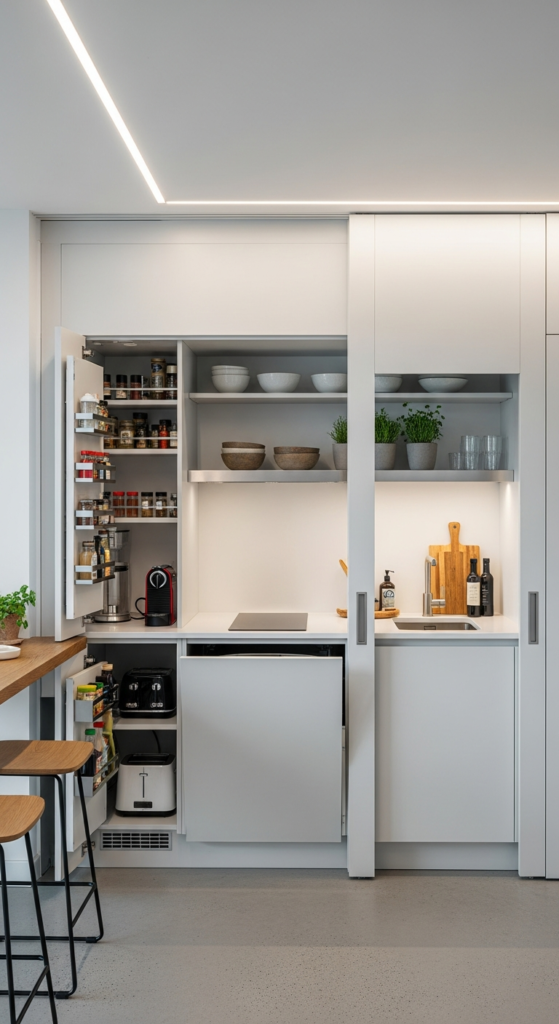
Sliding doors are practical small kitchen ideas that significantly improve accessibility and space efficiency. Traditional swing doors require clearance space to open and close, which can interrupt movement and limit layout options in compact kitchens. Sliding doors eliminate this problem by moving horizontally along tracks, allowing full access without consuming additional floor space. They can be used for pantry entrances, cabinet fronts, or even to separate the kitchen from adjacent living areas. This creates smoother traffic flow and makes the kitchen easier to navigate, especially in narrow or high-traffic layouts.
The material choice for sliding doors greatly affects the overall look and feel of the kitchen. Glass or frosted panels help maintain openness and allow light to pass through, while lightweight wood adds warmth without visual heaviness. Soft-close and smooth-glide mechanisms enhance durability and everyday usability. Sliding doors are especially beneficial in open-plan homes where maintaining visual connection between spaces is important. By replacing swing doors with sliding alternatives, small kitchens gain flexibility, efficiency, and a more modern, streamlined appearance.
18. Minimalist Hardware and Handles
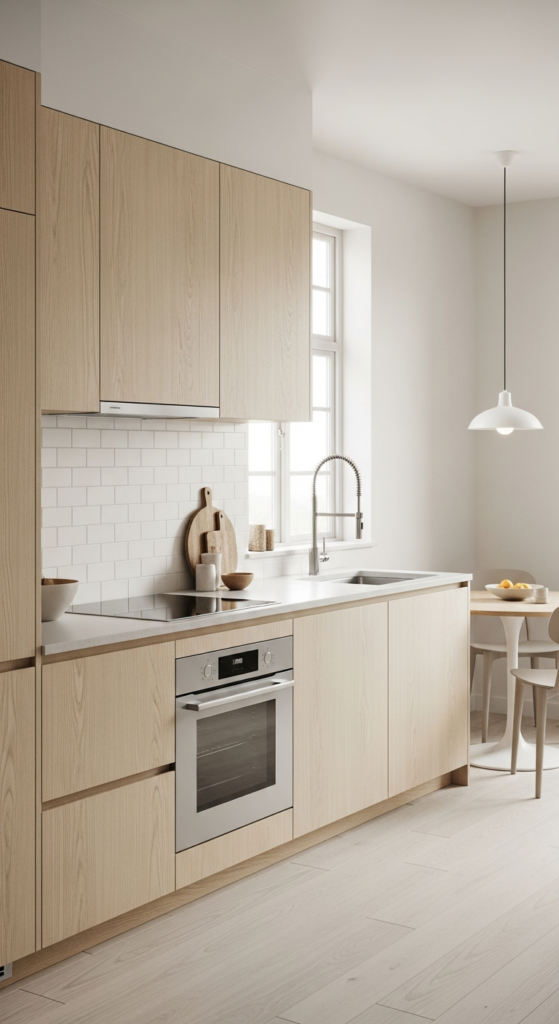
Minimalist hardware and handles are often overlooked but play a crucial role in successful small kitchen ideas. Bulky handles, knobs, or decorative hardware can add unnecessary visual clutter, making cabinets appear heavier and the space more crowded. Sleek, low-profile handles or handle-less designs create a clean, streamlined look that enhances the perception of space. By reducing visual interruptions across cabinetry, minimalist hardware allows the kitchen to feel calmer, more open, and easier on the eyes, which is especially important in compact layouts.
Choosing finishes that blend seamlessly with cabinetry further improves cohesion. Matte finishes, recessed pulls, or push-to-open mechanisms eliminate visual noise while maintaining full functionality. This approach works particularly well in modern and contemporary kitchens, where simplicity supports efficiency. Minimalist hardware also allows other design elements, such as backsplashes or countertops, to stand out without competition. By simplifying small details, this idea contributes to an uncluttered and spacious kitchen environment that feels intentional and well-designed.
19. Consistent Flooring Throughout
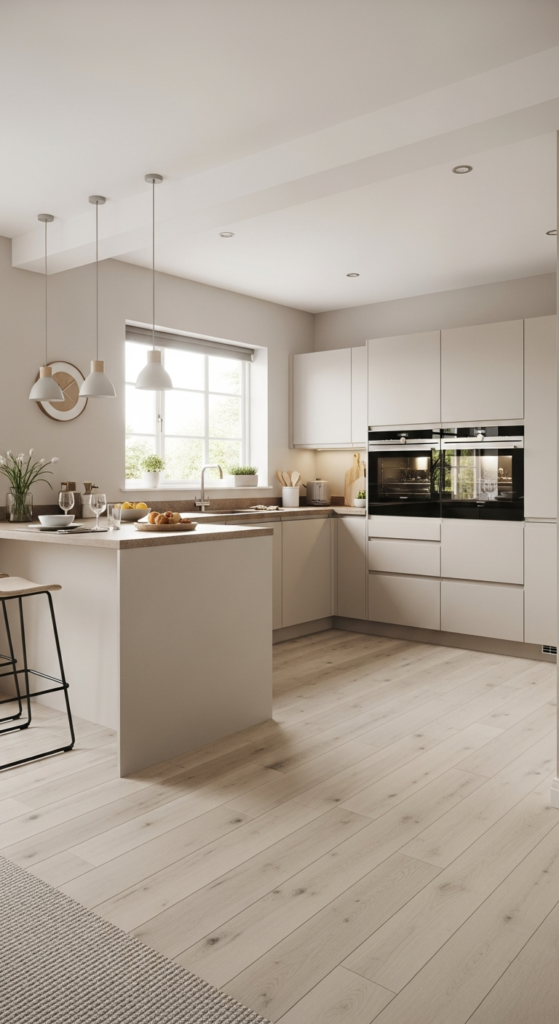
Consistent flooring is one of the most effective small kitchen ideas for creating the illusion of a larger and more connected space. Using the same flooring material throughout the kitchen and adjacent areas eliminates visual breaks that can make a space feel segmented and cramped. When the eye moves seamlessly from one area to another without interruption, the kitchen appears more open and expansive. This strategy is particularly effective in open-plan homes or apartments where the kitchen blends into living or dining areas.
Light-colored or neutral flooring further enhances this effect by reflecting light and maintaining visual continuity. Durable materials such as tile, vinyl, or engineered wood offer practicality while supporting a cohesive aesthetic. Consistent flooring also simplifies design decisions, allowing cabinetry and décor to stand out without competing patterns. This idea not only improves visual flow but also contributes to a more polished and intentional interior. By removing unnecessary visual divisions, consistent flooring helps small kitchens feel unified, spacious, and thoughtfully designed.
Conclusion
Small kitchen ideas focus on maximizing potential rather than dwelling on limitations. Through smart layouts, vertical storage, adaptable furniture, and thoughtful design details, even the smallest kitchens can feel efficient, organized, and visually appealing. Each idea explored in this guide demonstrates how intentional planning and strategic choices transform compact kitchens into functional spaces that support daily routines with ease.
By balancing practicality with aesthetics, small kitchens can offer comfort, efficiency, and style without compromise. Whether through innovative storage solutions, flexible furniture, or subtle visual techniques, these small kitchen ideas prove that limited space does not limit creativity. With the right approach, a small kitchen can become one of the most enjoyable, efficient, and well-designed areas of the home.