19 Minimalist Bedroom Ideas That Feel Open
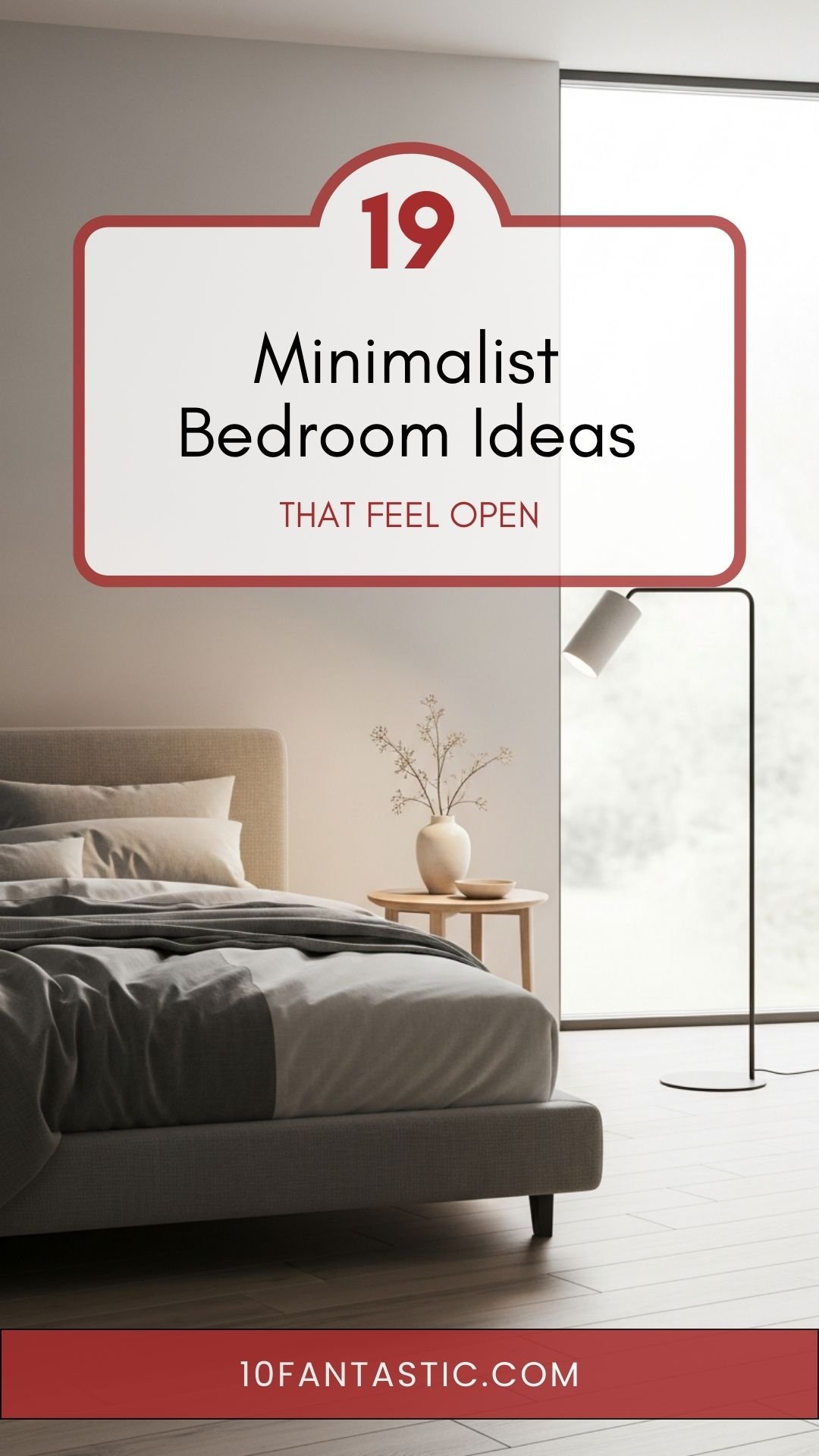
Minimalist bedroom ideas focus on creating calm, breathable spaces where every element serves a purpose. A well-designed minimalist bedroom eliminates visual clutter while enhancing openness, making the room feel larger and more serene. By prioritizing clean lines, thoughtful layouts, and restrained color palettes, minimalist bedroom ideas transform sleeping spaces into restful retreats that support both comfort and clarity. When done correctly, minimalism does not feel cold or empty; instead, it feels intentional, balanced, and inviting.
The key to minimalist bedroom ideas that feel open lies in how space is used rather than how much furniture is added. Strategic placement, negative space, and cohesive materials allow the room to breathe. Lighting, textures, and subtle contrasts replace heavy décor, ensuring the space remains visually interesting without overwhelming the senses. The following minimalist bedroom ideas are designed to help you create a bedroom that feels open, peaceful, and effortlessly refined.
1. Low-Profile Bed Frame for Visual Flow

A low-profile bed frame is one of the most effective minimalist bedroom ideas for making a space feel open and grounded. Lowering the visual height of the bed allows more wall and window space to remain visible, which naturally expands the perceived size of the room. This design approach creates a horizontal emphasis that makes ceilings appear higher and the room feel less crowded. Low-profile beds also align with minimalist principles by maintaining simple silhouettes and eliminating unnecessary ornamentation.
Beyond visual benefits, low-profile bed frames enhance the sense of calm that minimalist bedroom ideas aim to achieve. Their clean structure allows surrounding elements, such as lighting and textures, to stand out without competition. Choosing materials like natural wood or upholstered frames in neutral tones adds warmth while maintaining simplicity. This idea works especially well in small bedrooms, where vertical space must be preserved. A low-profile bed frame encourages openness while reinforcing the minimalist philosophy of intentional design.
2. Neutral Color Palette with Soft Contrast
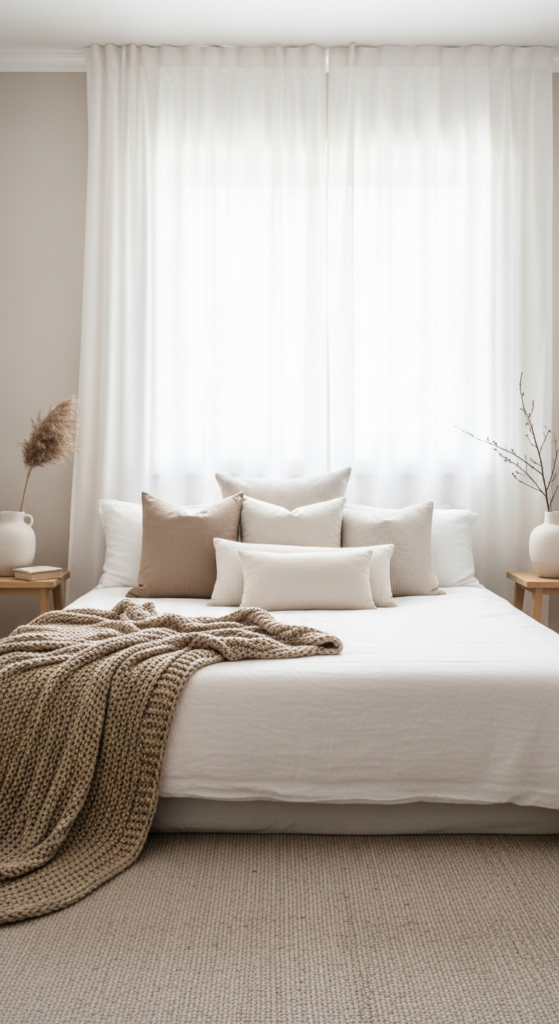
Neutral color palettes are foundational to minimalist bedroom ideas that feel open and relaxing. Shades of white, beige, soft gray, and muted earth tones reflect light effectively, helping the room appear brighter and more spacious. Instead of relying on bold color changes, minimalist design uses subtle tonal shifts to create depth without visual noise. This approach allows the eye to move freely around the room, reinforcing a sense of openness.
Soft contrast within a neutral palette keeps the space from feeling flat. Layering warm and cool neutrals through bedding, walls, and flooring adds dimension while maintaining harmony. Textured fabrics, such as linen or cotton, introduce interest without clutter. Minimalist bedroom ideas benefit from this restrained use of color, as it promotes calm and visual continuity. The result is a bedroom that feels cohesive, airy, and intentionally designed for rest.
3. Built-In Storage to Reduce Visual Clutter

Built-in storage is a smart solution among minimalist bedroom ideas because it minimizes visual clutter while maximizing functionality. Integrated wardrobes, drawers, or shelving blend seamlessly into walls, reducing the need for bulky furniture. By keeping storage concealed, the room maintains clean lines and uninterrupted surfaces, which enhances the feeling of openness.
This approach allows everyday items to remain hidden, supporting the minimalist goal of visual calm. Built-in storage can be customized to fit the room’s dimensions, making it especially effective for small or awkward layouts. When finished in the same color as the walls, storage elements visually disappear, further expanding the sense of space. Minimalist bedroom ideas that incorporate built-in storage balance practicality with aesthetics, ensuring the room remains organized without sacrificing openness.
4. Floating Nightstands for Floor Visibility

Floating nightstands are a subtle yet impactful feature among minimalist bedroom ideas that aim to feel open. By lifting furniture off the floor, more visible floor space is created, which instantly makes the room feel larger. Floating nightstands maintain functionality while contributing to a lighter, more streamlined appearance.
Their wall-mounted design eliminates bulky legs and unnecessary mass. Choosing simple, handle-free designs enhances the minimalist aesthetic. Floating nightstands also make cleaning easier, reinforcing practicality. When paired with wall-mounted lighting, they further reduce surface clutter. This minimalist bedroom idea is ideal for creating an uncluttered environment where each element feels deliberate and balanced.
5. Limited Furniture with Purposeful Placement

One of the core principles behind minimalist bedroom ideas is limiting furniture to only what is necessary. Fewer pieces allow the room to breathe and prevent overcrowding. Purposeful placement ensures each item contributes to comfort and function without disrupting flow.
Spacing furniture away from walls where possible creates negative space that enhances openness. A carefully placed chair or bench adds usability without overwhelming the layout. Minimalist bedroom ideas thrive when furniture supports movement and visual clarity. By editing out excess pieces, the bedroom becomes a calm, open environment that promotes rest and relaxation.
6. Wall-Mounted Lighting to Free Space
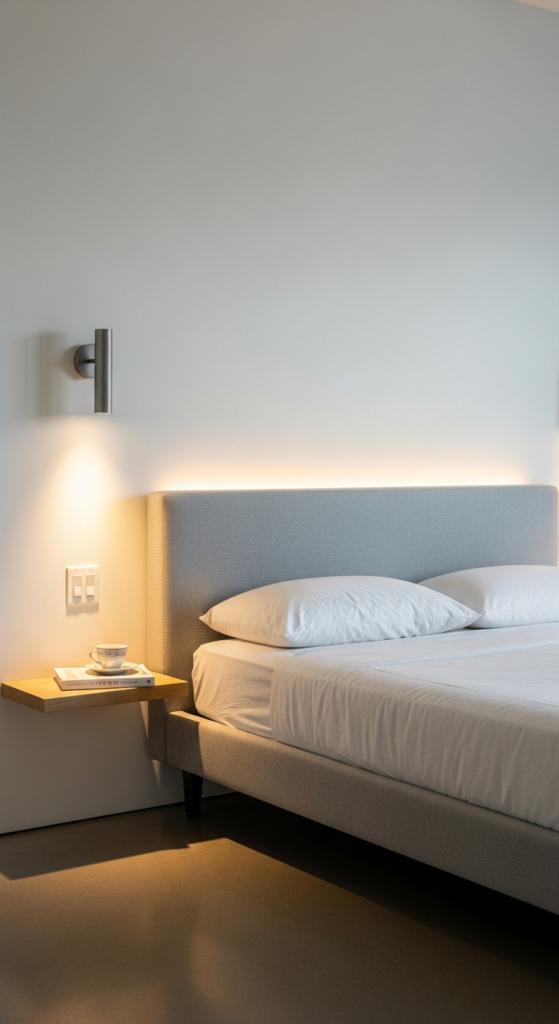
Wall-mounted lighting is one of the most effective minimalist bedroom ideas for maintaining an open and uncluttered layout. By replacing traditional table lamps with sconces or adjustable wall lights, valuable surface space is freed on nightstands or walls. This design choice reduces visual congestion and allows furniture to remain sleek and minimal. Wall-mounted lighting also creates clean vertical lines, which help guide the eye upward and enhance the perception of height in the room.
In minimalist bedroom ideas, lighting should feel intentional rather than decorative. Simple fixtures with matte finishes or neutral tones blend seamlessly into the design. Adjustable sconces add functionality for reading without introducing excess elements. When paired with soft, warm bulbs, wall-mounted lighting supports a calming atmosphere while maintaining openness. This approach reinforces the minimalist principle of doing more with less, ensuring the bedroom remains visually balanced and spacious.
7. Floor-to-Ceiling Curtains for Height Illusion
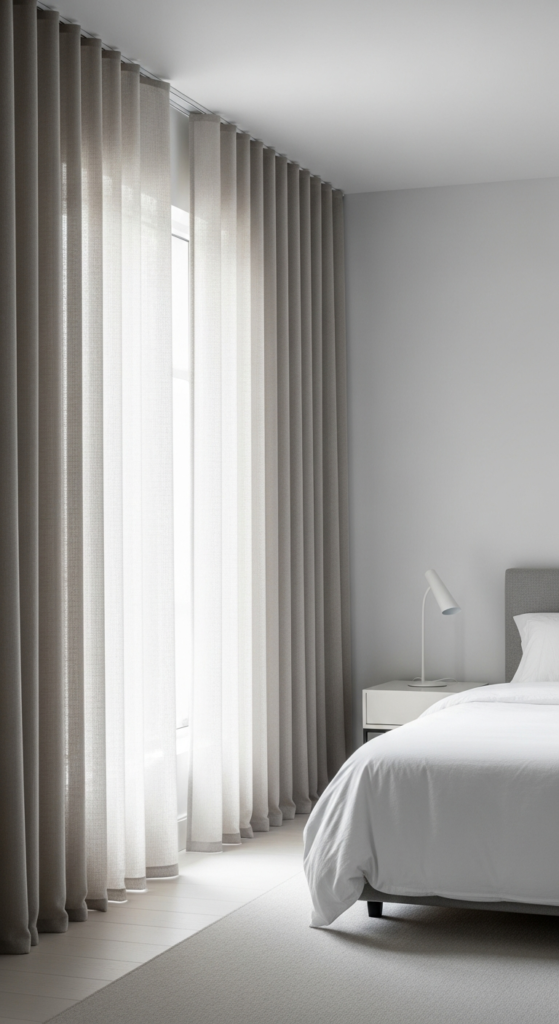
Floor-to-ceiling curtains are a powerful visual trick used in minimalist bedroom ideas to make spaces feel taller and more open. Hanging curtains higher than the window frame draws the eye upward, creating the illusion of increased ceiling height. When curtains flow uninterrupted to the floor, they add elegance without heaviness, especially when chosen in lightweight, neutral fabrics.
Sheer or lightly textured curtains allow natural light to filter through while maintaining privacy. This enhances brightness, a key element in minimalist bedroom ideas. Avoiding bold patterns keeps the look clean and cohesive. When curtains blend closely with wall colors, they visually disappear, expanding the space further. This simple design move delivers both function and aesthetic clarity, contributing to a calm and open bedroom environment.
8. Minimal Artwork with Strategic Placement
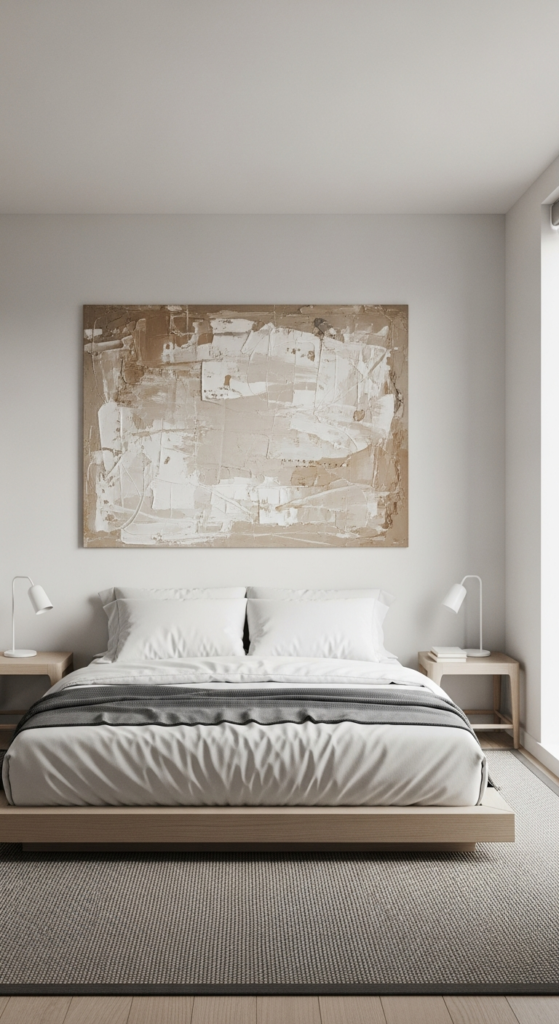
Artwork in minimalist bedroom ideas should be used sparingly and intentionally. Instead of multiple small pieces, a single well-placed artwork creates focus without overwhelming the space. This approach maintains visual calm while adding personality. Large-scale art with soft colors or abstract forms complements minimalist interiors and avoids unnecessary detail.
Strategic placement is essential. Centering artwork above the bed or on a prominent wall ensures balance. Leaving surrounding wall space empty allows the art to breathe and enhances openness. Minimalist bedroom ideas rely on restraint, making each decorative element feel purposeful. Thoughtfully chosen artwork adds character while preserving the clean, uncluttered atmosphere essential to minimalism.
9. Hidden Storage Under the Bed

Under-bed storage is a practical addition to minimalist bedroom ideas that keeps the room visually clean. Utilizing this often-overlooked space allows essential items to remain accessible yet hidden. Storage drawers or lift-up bed bases eliminate the need for extra furniture, preserving openness.
This solution supports minimalism by reducing surface clutter and maintaining clean lines. When storage is concealed, the bedroom appears more spacious and organized. Choosing bed frames with integrated storage ensures seamless design integration. Minimalist bedroom ideas benefit from such hidden functionality, as it allows the room to stay calm, orderly, and visually expansive.
10. Natural Light as a Design Feature
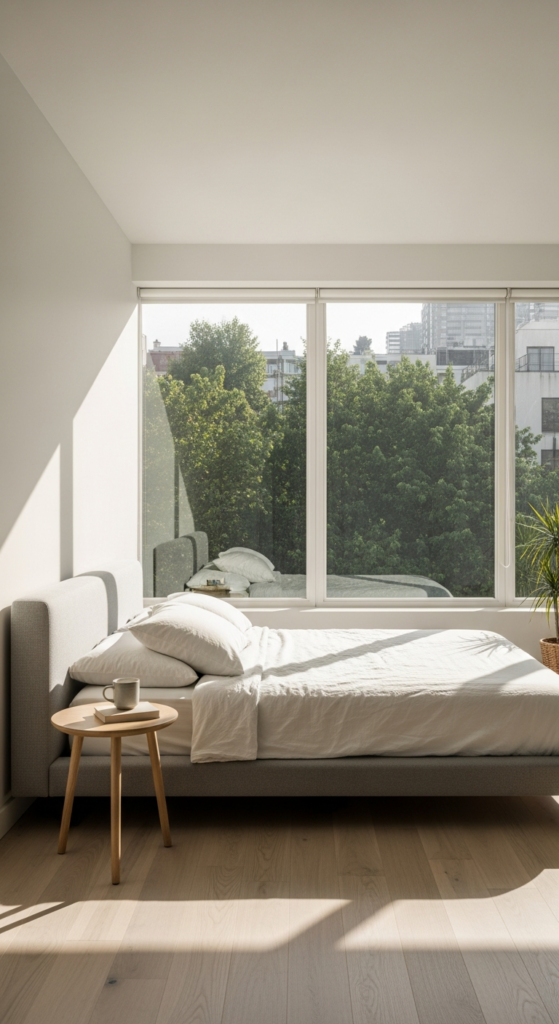
Natural light is a cornerstone of minimalist bedroom ideas that feel open and uplifting. Large windows, unobstructed by heavy coverings, allow sunlight to fill the room and enhance spatial perception. Brightness reduces the need for excessive décor, letting light itself become a design feature.
Positioning the bed and furniture to maximize light exposure further enhances openness. Reflective surfaces, such as light-colored walls or subtle mirrors, amplify natural light. Minimalist bedroom ideas that prioritize daylight feel fresher and more connected to the outdoors. This approach supports both visual openness and emotional well-being, making the bedroom a restful retreat.
11. Platform Bed with Clean Lines

A platform bed with clean lines is one of the most timeless minimalist bedroom ideas for achieving an open and uncluttered look. Platform beds sit low to the ground and often feature simple frames without headboards or ornate detailing. This streamlined design reduces visual weight, allowing the room to feel more spacious and balanced. Clean lines create a sense of order, which is central to minimalist aesthetics.
Choosing a platform bed in a neutral or natural finish enhances cohesion with the rest of the room. Materials such as wood or upholstered fabric add warmth while maintaining simplicity. Pairing the bed with minimal bedding keeps attention on form rather than decoration. Minimalist bedroom ideas that incorporate platform beds emphasize function, calmness, and spatial clarity, making the sleeping area feel effortlessly open.
12. Open Shelving with Intentional Styling

Open shelving can support minimalist bedroom ideas when styled thoughtfully and sparingly. Rather than filling shelves with numerous items, displaying only a few curated objects maintains visual calm. Books, small plants, or simple ceramics add personality without overcrowding the space. Open shelves replace bulky cabinets, contributing to a lighter appearance.
The key to success is restraint. Leaving negative space between items ensures shelves do not become visually heavy. Matching shelf colors to wall tones helps them blend seamlessly into the background. Minimalist bedroom ideas benefit from this balance of storage and display, allowing functionality while preserving openness. Open shelving, when used with intention, enhances both form and function.
13. Subtle Textures Instead of Bold Patterns

Minimalist bedroom ideas rely on texture rather than pattern to create interest. Incorporating materials such as linen, wool, or soft wood introduces depth without overwhelming the space. Subtle textures catch light gently, adding warmth while maintaining visual simplicity.
Layering textures through bedding, rugs, or upholstery creates comfort without clutter. Avoiding bold patterns ensures continuity and openness. This approach allows the room to feel inviting yet restrained. Minimalist bedroom ideas that focus on texture over pattern create a refined, calming environment that feels both modern and timeless.
14. Minimal Décor with Negative Space
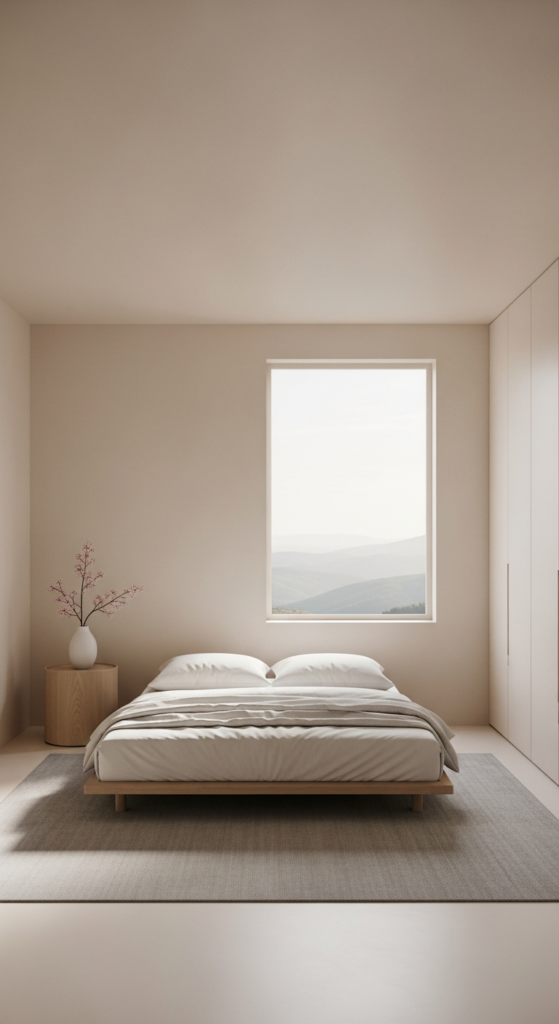
Negative space is a defining feature of minimalist bedroom ideas that feel open and intentional. Leaving areas of the room empty allows the eye to rest and enhances spatial clarity. Instead of filling every corner, selecting a few meaningful décor pieces creates balance.
Minimal décor emphasizes quality over quantity. Each item serves a purpose, whether functional or aesthetic. Negative space around furniture and décor amplifies their impact. Minimalist bedroom ideas thrive when restraint guides design decisions, resulting in a space that feels calm, airy, and visually expansive.
15. Matching Furniture for Visual Cohesion
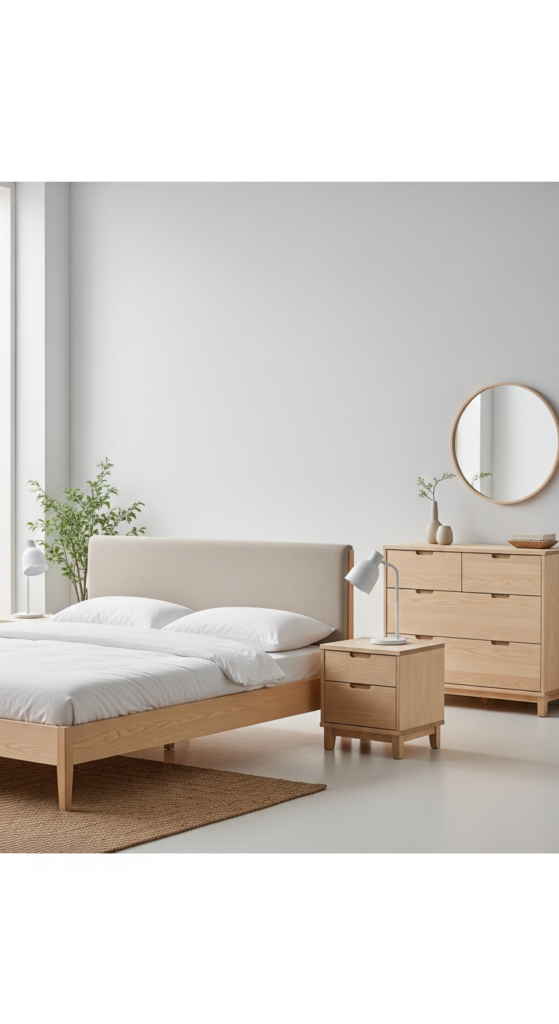
Matching furniture contributes to harmony, a key goal of minimalist bedroom ideas. When bed frames, nightstands, and dressers share similar finishes or designs, the room feels unified. Visual consistency reduces distraction and enhances openness.
This cohesion allows the eye to move smoothly across the space. Simple silhouettes and neutral finishes prevent furniture from dominating the room. Minimalist bedroom ideas that emphasize matching elements create a cohesive environment where simplicity and balance take center stage, resulting in a bedroom that feels spacious and calm.
16. Hidden Wardrobes with Flush Panels
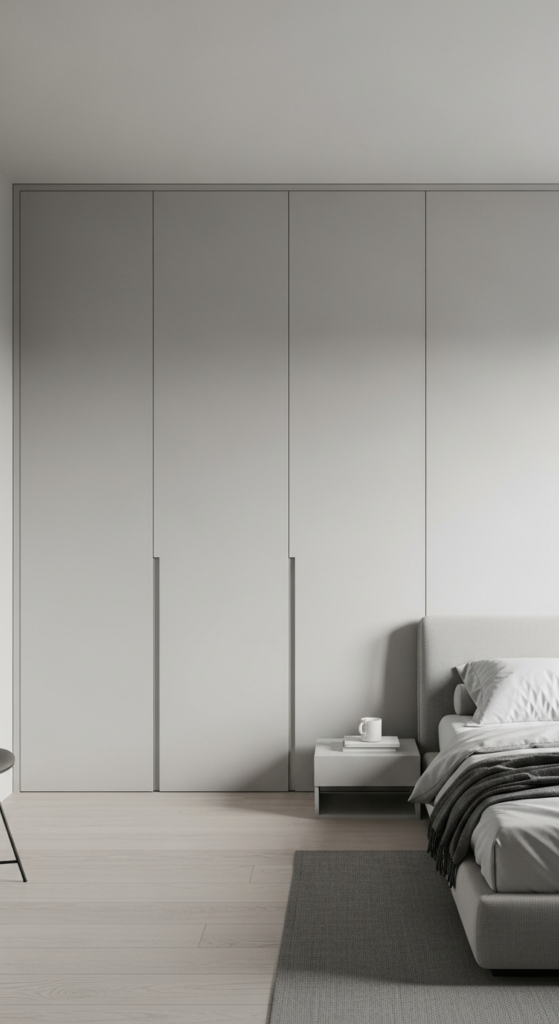
Hidden wardrobes with flush panels are a refined solution within minimalist bedroom ideas that prioritize openness and clean lines. When wardrobe doors align seamlessly with wall surfaces, they visually disappear, reducing visual interruptions. This design approach maintains a smooth, uninterrupted plane that allows the room to feel larger and calmer. Hidden wardrobes are particularly effective in smaller bedrooms where traditional closets can dominate the space.
Choosing matte finishes in neutral shades helps wardrobes blend effortlessly into the background. Handle-less doors or push-to-open mechanisms further support the minimalist aesthetic. This storage solution keeps clothing and personal items out of sight, reinforcing order and tranquility. Minimalist bedroom ideas that incorporate hidden wardrobes demonstrate how functionality can exist without compromising visual simplicity or openness.
See More: 20 Dining Room Ideas
17. Light Wood Elements for Warmth
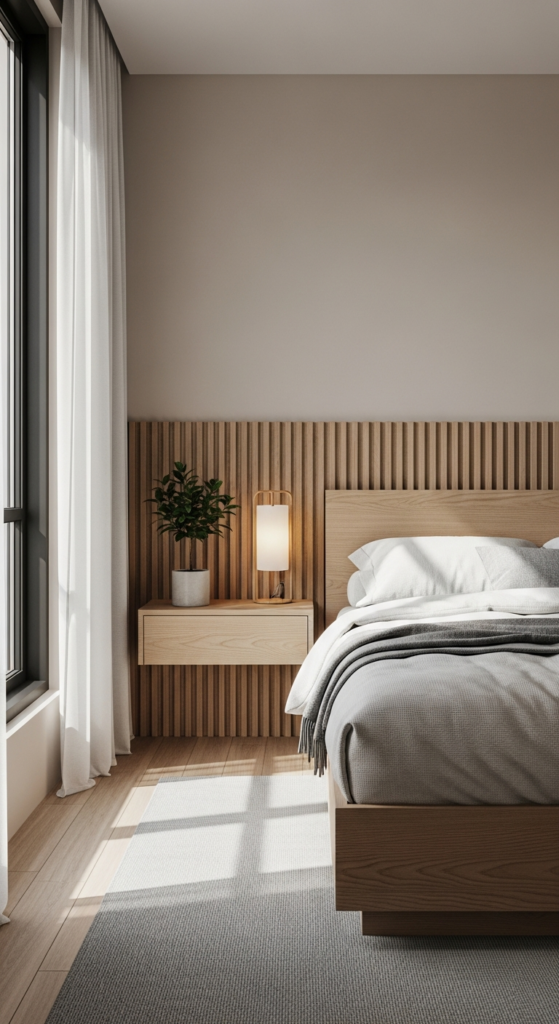
Light wood elements introduce warmth while maintaining the openness central to minimalist bedroom ideas. Materials such as oak, birch, or maple add natural texture without heaviness. Light wood reflects natural light, preventing the room from feeling dark or enclosed. Used in flooring, bed frames, or accents, it balances minimalism with comfort.
The key is restraint. Incorporating light wood in limited, intentional areas preserves simplicity. Pairing wood with neutral textiles enhances cohesion and calm. Minimalist bedroom ideas that include light wood feel inviting yet uncluttered, proving that minimal spaces can be both warm and visually expansive.
18. Simple Headboard or No Headboard
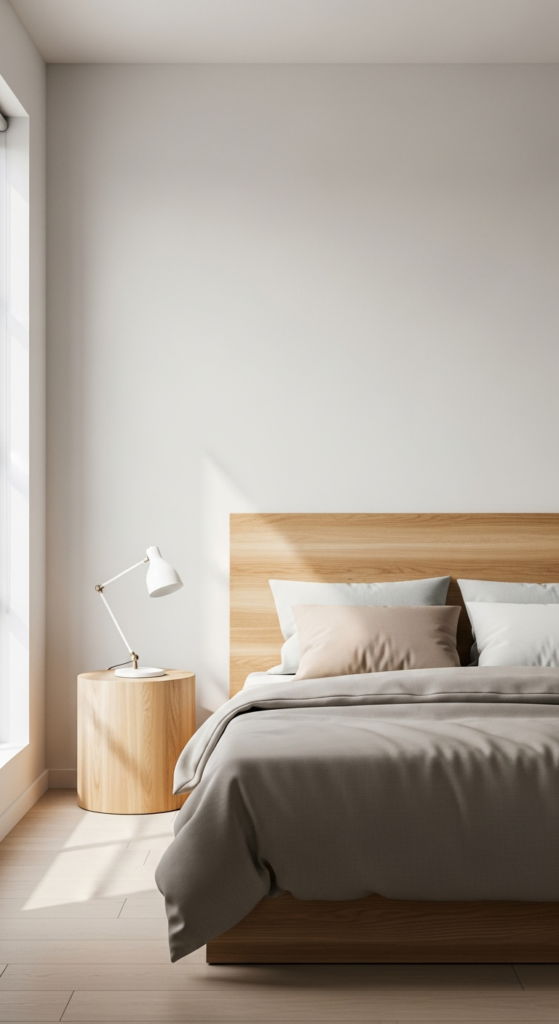
A simple headboard or the absence of one supports minimalist bedroom ideas by reducing visual mass. Ornate headboards can dominate a room, while minimal designs allow walls and negative space to take precedence. A low-profile upholstered or wooden headboard provides subtle structure without overwhelming the space.
Alternatively, skipping a headboard entirely creates an even cleaner look. This approach emphasizes openness and flexibility in layout. Minimalist bedroom ideas often favor understated solutions that let the room breathe. By minimizing the bed’s visual footprint, the bedroom feels more spacious and serene.
19. Consistent Color Flow Throughout the Room

Consistent color flow is one of the most powerful minimalist bedroom ideas for creating openness. When walls, furniture, and textiles share a cohesive palette, visual breaks are minimized. This continuity allows the room to feel larger and more unified. Soft tonal variations within the same color family add depth without distraction.
Maintaining consistency does not mean monotony. Subtle changes in texture and finish prevent flatness. Minimalist bedroom ideas that rely on color flow feel intentional and calming, encouraging relaxation. This approach ensures that every element contributes to the overall sense of openness and balance.
Conclusion
Minimalist bedroom ideas that feel open are rooted in thoughtful restraint, intentional design, and respect for negative space. By focusing on clean lines, cohesive colors, and functional simplicity, bedrooms can transform into calm retreats that promote rest and clarity. Each design choice, from furniture selection to lighting and storage, contributes to the overall sense of openness and balance.
These minimalist bedroom ideas prove that less truly can be more when executed with purpose. By prioritizing quality, light, and spatial flow, you can create a bedroom that feels expansive, peaceful, and timeless. With the right approach, minimalism becomes not just a style, but a way to enhance daily comfort and well-being.